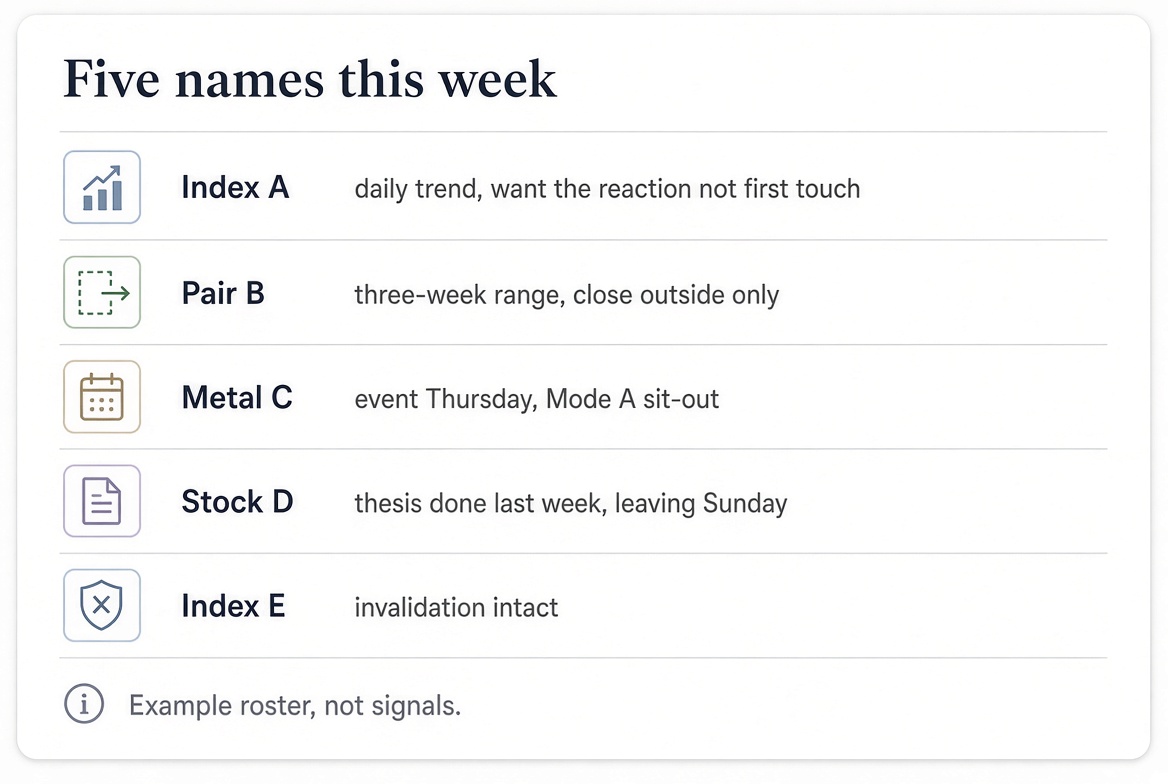
A long watchlist feels like work. It is usually avoidance.
I cap the active list at five. Indexes, pairs, names — the number is the rule, not the asset class. If a sixth idea is good, something on the list has to leave.
Why five
I can mark five weeklies on Sunday. I cannot mark twenty and still remember invalidation on Wednesday. Attention is part of risk. A sixth chart is a second job I did not staff.
How a name gets on the list
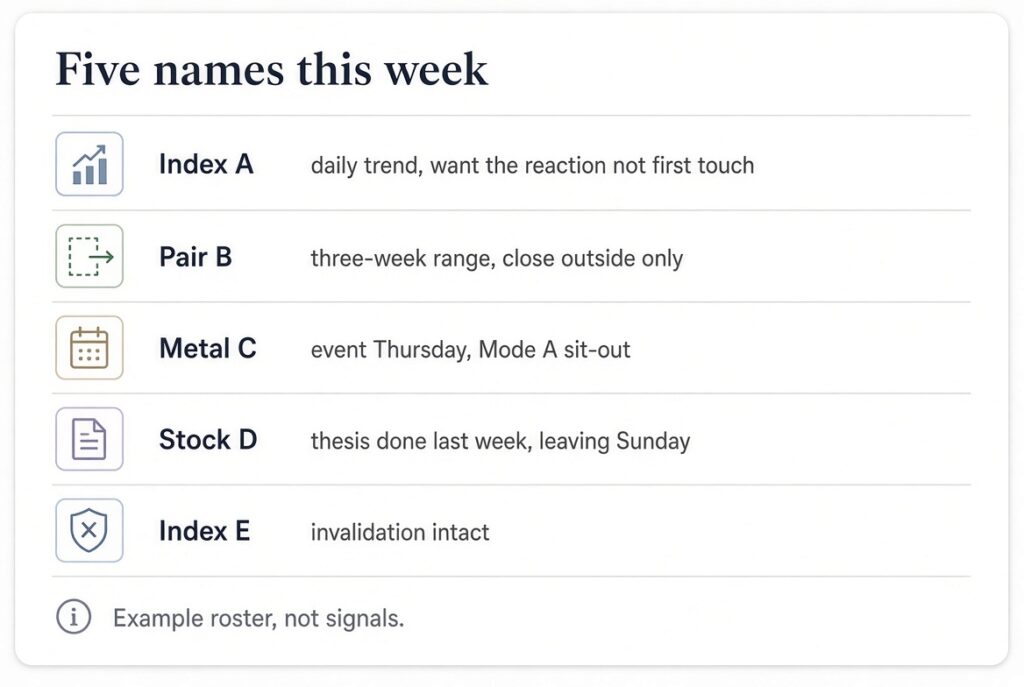
It needs one written reason for this week. Examples:
– “Daily trend intact, coming into last month’s high. I want the reaction, not the first touch.”
– “Range for three weeks. I will only act on a close outside.”
– “Earnings next Thursday. This is a Mode A sit-out. It stays on the list so I do not forget the date.”
“It is moving” is not a reason. Everything moves.
How a name leaves
– The reason expired (event done, range broken and I missed the close)
– I traded it and the thesis is done
– I have not looked at it in five sessions (then it was never on the list)
Leaving is not failure. It is how the list stays honest.
What I do with the sixth idea
I write it at the bottom of the journal as “candidate.” I do not open a sixth chart workspace. If it still matters next Sunday, it can replace a name that no longer has a reason.
This pairs with one market, three timeframes. The watchlist is the roster. The three clocks are how I look at the starter.
Boredom test
If I add names because the five are quiet, I am looking for action, not for process. Quiet markets are when the checklist should be easiest to obey. Adding tickers is how quiet sessions become sloppy ones.
Five names. One reason each. The rest can wait until Sunday.