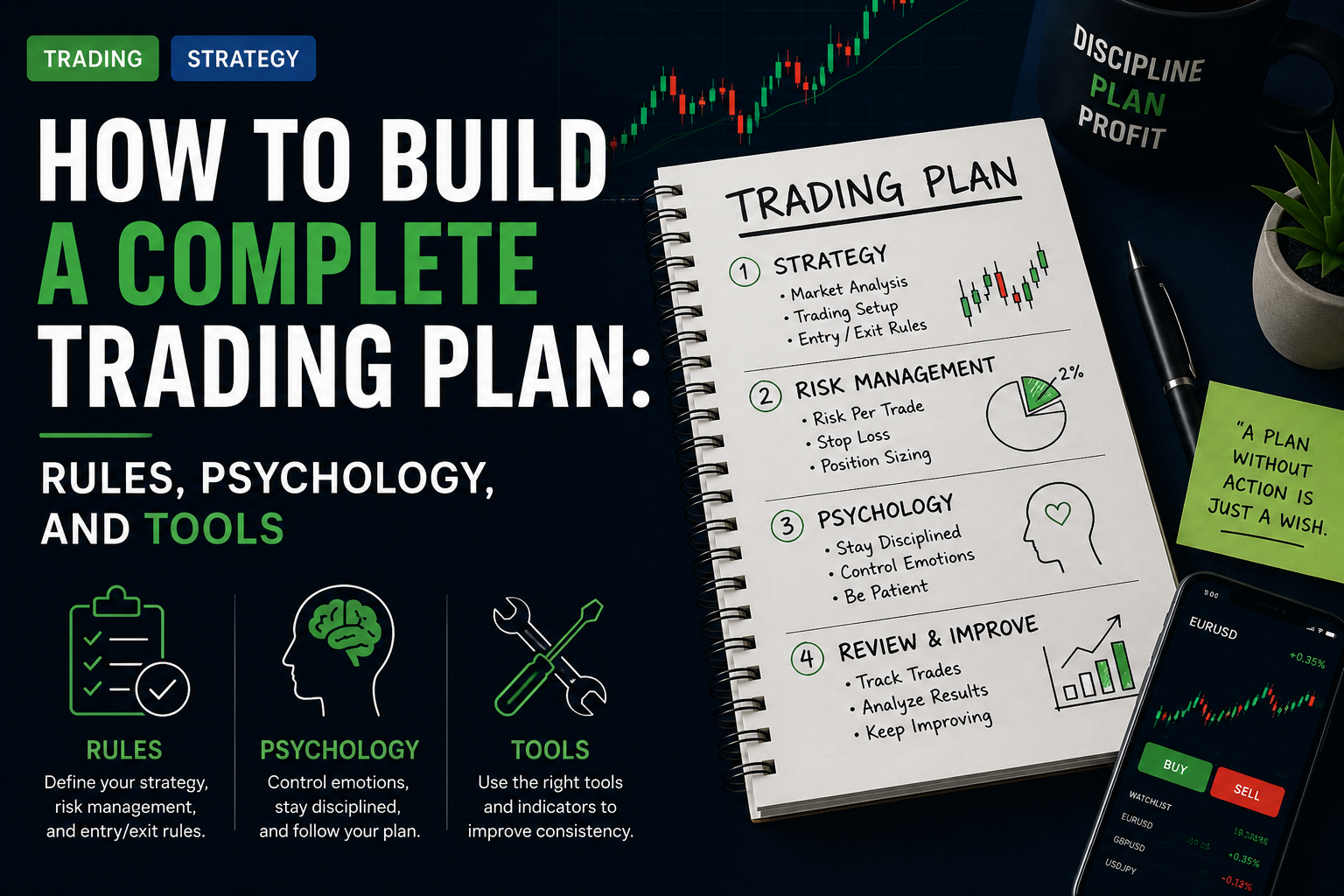
A professional trading plan is like a business plan for your trading career. It removes emotions from decision-making and gives you a clear, repeatable framework for success.
Most beginners trade without a plan and wonder why they lose money. In this comprehensive guide, you’ll learn how to build a complete trading plan that covers rules, psychology, and tools — turning trading from gambling into a structured process.
Important Disclaimer: Trading involves substantial risk of loss and is not suitable for everyone. This article is for educational purposes only and does not constitute financial advice.
My Personal Perspective: Building a Practical Toolkit That Works
When I look back at my own trading evolution, I realized early on that having a scattered approach leads straight to blown accounts. Over time, I’ve refined my workflow by relying on a specific set of tools and a strict personal rulebook to keep everything organized. For example, I use robust screeners like Finviz to hunt down strong setups, TradingView for clean technical charting, and MetaTrader for trade execution. For logging, tracking, and keeping notes, old-school tools like Excel and Notepad have proven to be absolute game-changers for keeping my head clear and my metrics straight.
Furthermore, combining these with external tools to track upcoming earnings reports, macroeconomic events, and breaking catalysts ensures I am never blindsided by unexpected volatility. Your trading plan isn’t just a theoretical document—it’s your command center.
Why Every Trader Needs a Written Trading Plan
A trading plan acts as your personal rulebook. It keeps you disciplined during winning streaks and losing streaks alike. Without one, emotions like fear and greed take control.
Benefits of Having a Trading Plan:
- Consistent decision-making
- Easier performance tracking
- Faster learning through regular review
- Reduced emotional trading and impulsive entries
- Professional-level discipline
1. Core Rules of Your Trading Plan
Your rules should be specific, measurable, and written down.
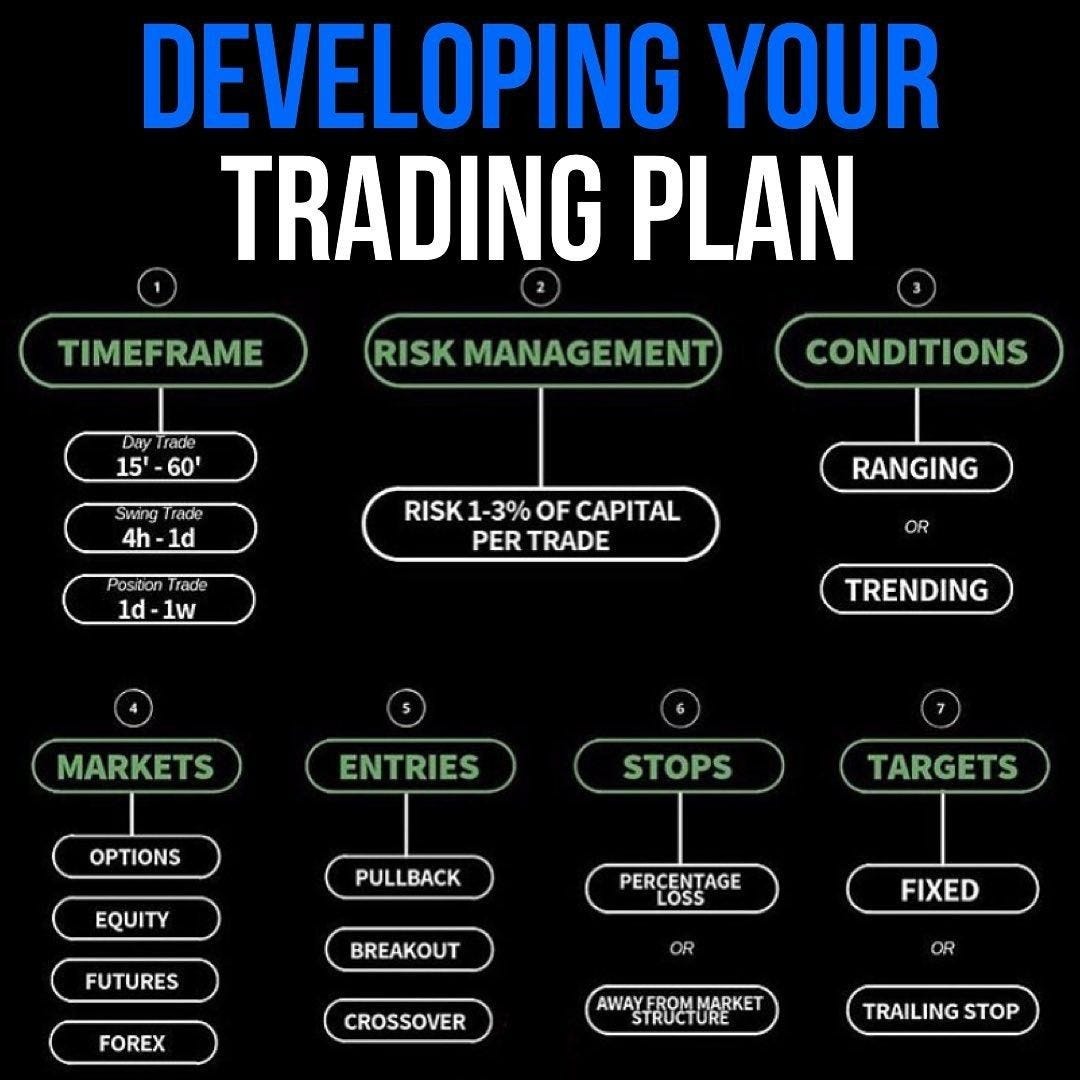
A. Trading Style & Timeframes
- Define your style: Swing Trading, Day Trading, or Position Trading
- Specify timeframes you will trade (e.g., Daily for trend, 4H for setup, 1H for execution)
B. Strategy & Setup Rules
- List the exact strategies you will trade (e.g., Moving Average Crossovers, Pullbacks to Support, Flag Patterns)
- Entry criteria (must have at least 2–3 confluences)
- Exit criteria (profit targets and strict stop-loss rules)
C. Risk Management Rules (Non-Negotiable)
- Maximum risk per trade: 1% of total account balance
- Maximum daily risk limit
- Risk-Reward Ratio: Minimum 1:2 or 1:2.5
- Precise position sizing formula
D. Trade Management Rules
- When to trail stops or move to breakeven
- News event policy (staying flat during high-impact earnings or FOMC drops)
2. Psychology: The Mental Game
Psychology often determines success far more than any single strategy.
Key Psychological Rules to Include:
- Pre-trading preparation routine (chart analysis and market scanning)
- Maximum number of trades per week to avoid overtrading
- “24-hour rule” after a tough loss — stepping away if emotions flare up
- Daily trading checklist to ensure total plan adherence
- How to handle losing streaks without revenge trading
Mindset Principles:
- Focus entirely on execution process rather than immediate P&L
- Accept that losing trades are a standard cost of doing business
- Review mistakes objectively without self-judgment
3. Tools & Resources: My Personal Setup
Having the right stack of tools makes executing your plan smooth and efficient:
- Screeners: Finviz for filtering stocks, sectors, and momentum scans.
- Charting & Analysis: TradingView for drawing support/resistance, indicators, and multi-timeframe mapping.
- Execution: MetaTrader for placing trades and managing orders cleanly.
- Journaling & Notes: Excel spreadsheets for quantitative performance tracking and Notepad for quick thoughts and qualitative trade reflections.
- Macro & Calendars: Dedicated economic and earnings calendars to track upcoming reports, dividends, and high-impact events.
Sample Trading Plan Template
Trading Plan Summary
- Style: Swing Trading
- Markets: Stocks & Forex
- Timeframes: Daily (trend), 4H (setup), 1H (entry)
- Strategies: Moving Average Pullbacks, Flag Patterns, Support/Resistance Bounces
- Risk Management: Max 1% risk per trade, 1:2.5 minimum R:R
- Daily Routine: 30 minutes morning scanning via Finviz and TradingView, evening review in Excel
- Psychology Rules: Max 3 open positions at once, zero revenge trading after a red day
How to Implement and Improve Your Trading Plan
- Write your plan down (keep it concise — 1 to 2 pages max)
- Backtest your strategy across historical data
- Practice on a demo or paper trading account for a few months
- Go live with small position sizes
- Review your performance monthly in Excel and update your plan as needed
Key Takeaways
- A complete trading plan includes clear rules, strong psychology guidelines, and a reliable toolkit.
- Risk management and psychological discipline matter infinitely more than finding a “holy grail” indicator.
- Utilize powerful tools like Finviz for screening, TradingView and MetaTrader for charting/execution, and Excel/Notepad for journaling.
- Treat your trading plan as a living document — review, adapt, and refine it regularly.
- Consistency and strict process adherence will always beat erratic trading.
Building a solid trading plan is one of the highest-leverage actions you can take as a trader, transforming scattered efforts into a professional, repeatable system.
In the next post, we’ll dive deep into Trading Psychology — mastering the mental side of the game that separates consistently profitable traders from the rest!