A professional trading plan is like a business plan for your trading career. It removes emotions from decision-making and gives you a clear, repeatable framework for success.
Most beginners trade without a plan and wonder why they lose money. In this comprehensive guide, you’ll learn how to build a complete trading plan that covers rules, psychology, and tools — turning trading from gambling into a structured process.
Important Disclaimer: Trading involves substantial risk of loss and is not suitable for everyone. This article is for educational purposes only and does not constitute financial advice.
:max_bytes(150000):strip_icc()/Trading-psychology_final-509e7bc1c8484379afedd3adec526b71.png)
My Personal Confession: How FOMO and Lack of Discipline Cost Me Dearly
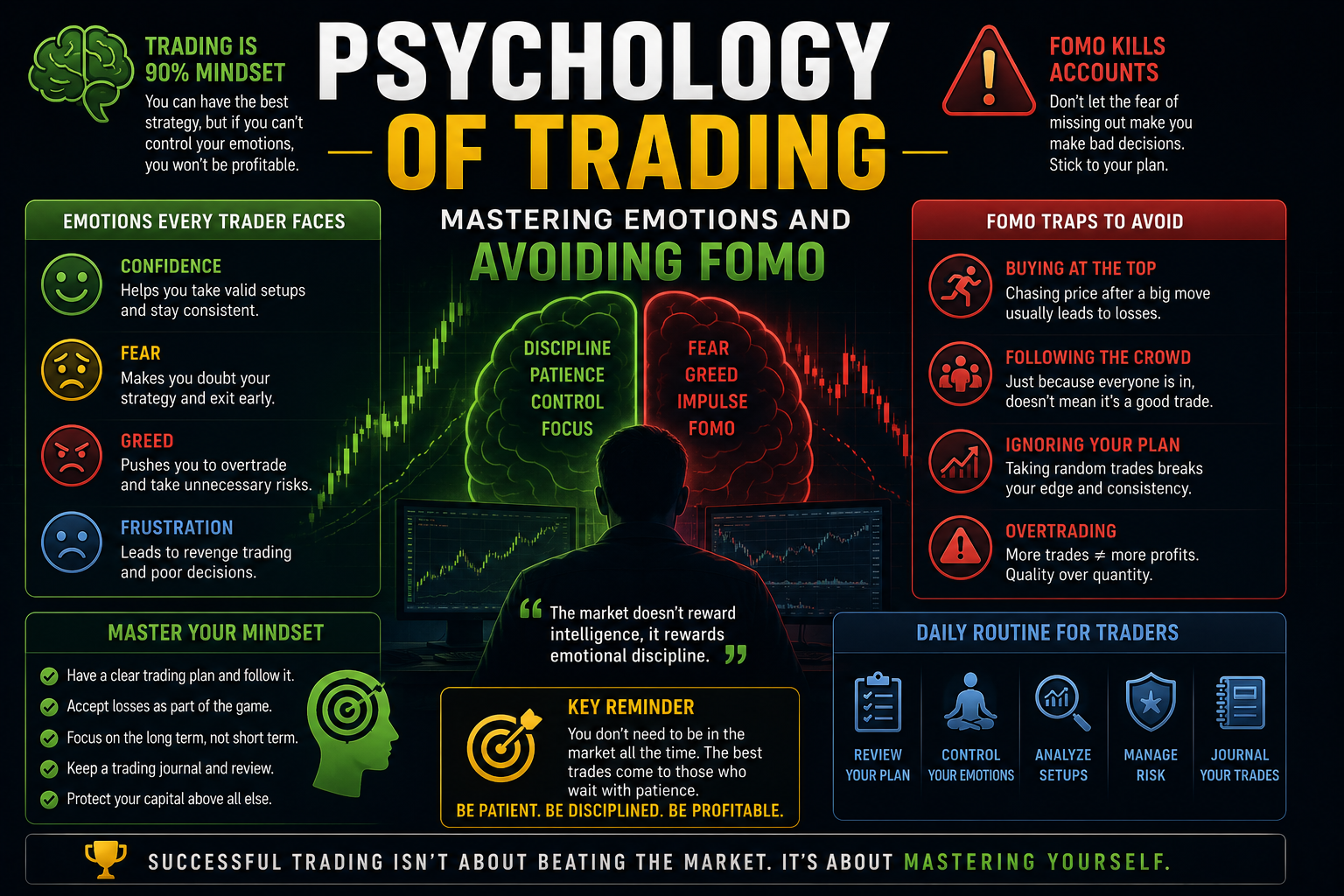
If I’m being completely honest, writing about trading psychology hits very close to home. I myself have failed many times in the past simply because of FOMO (Fear Of Missing Out) or a momentary lapse in discipline. Chasing green candles, revenge trading after a red day, or jumping into random trades because “it looked like it was flying” are classic traps that have cost me accounts in the early days.
The hard truth I learned the expensive way is this: you must have a completely clear head when you trade. The moment your emotions take the steering wheel—whether it’s greed, panic, or frustration—your technical edge evaporates. Mastering your mind isn’t just an optional bonus in trading; it is the absolute foundation that makes everything else work.
Why Every Trader Needs a Written Trading Plan
A trading plan acts as your personal rulebook. It keeps you disciplined during winning streaks and losing streaks alike. Without one, emotions like fear and greed take control.
Benefits of Having a Trading Plan:
- Consistent decision-making
- Easier performance tracking
- Faster learning through review
- Reduced emotional trading
- Professional-level discipline
1. Core Rules of Your Trading Plan
Your rules should be specific, measurable, and written down.
A. Trading Style & Timeframes
- Define your style: Swing Trading, Day Trading, or Position Trading
- Specify timeframes you will trade (e.g., Daily + 4H + 1H for swing trading)
B. Strategy & Setup Rules
- List the exact strategies you will trade (e.g., SMA Crossover, Breakout at Support, Pullback to Fibonacci)
- Entry criteria (must have at least 3 confluences)
- Exit criteria (profit target and stop-loss rules)
C. Risk Management Rules (Non-Negotiable)
- Maximum risk per trade: 1% of total account
- Maximum daily risk: 3%
- Maximum weekly risk: 6%
- Risk-Reward Ratio: Minimum 1:2
- Position sizing formula
D. Trade Management Rules
- When to trail stops
- When to move to breakeven
- News event policy (avoid trading during high-impact news)

2. Psychology: The Mental Game
Psychology often determines success more than strategy.
Key Psychological Rules to Include:
- Pre-trading routine (market preparation and clearing your mind)
- Maximum number of trades per day/week to avoid overtrading
- “24-hour rule” after a loss — no trading the next day if you feel emotional or tilted
- Daily trading checklist (am I following my plan, or am I trading out of boredom?)
- How to handle losing streaks (reduce size or step away completely)
- Win streak rules (don’t let ego inflate your position size out of greed)
Mindset Principles:
- Focus on process, not P&L
- Accept that losses are a normal cost of doing business
- Review mistakes without self-judgment
- Maintain a continuous learning attitude
3. Tools & Resources
Essential Tools:
- Charting Platform: TradingView (free & powerful)
- Broker Platform: Reliable, low-commission broker with good execution (like MetaTrader)
- Trading Journal: Excel spreadsheets or dedicated apps
- Economic Calendar: Investing.com or Forex Factory
- Screeners: Finviz, TradingView screener
- Backtesting Tools: TradingView replay or Python
Optional Advanced Tools:
- Volume Profile
- News feeds (Bloomberg, Benzinga)
- Alert systems
Sample Trading Plan Template
Trading Plan Summary
- Style: Swing Trading
- Markets: Stocks & Forex
- Timeframes: Daily (trend), 4H (setup), 1H (entry)
- Strategies: Moving Average Pullback, Flag Patterns, Fibonacci Confluence
- Risk Management: 1% per trade, 1:2.5 minimum R:R
- Daily Routine: 30 min morning preparation, journal review in evening
- Psychology Rules: Max 3 trades per week, strict zero-tolerance policy for revenge trading
Real-World Example
A successful swing trader’s plan might look like this:
- Only trades when Daily chart shows clear trend (price above 200 SMA)
- Enters on 4H chart after pullback to 50 EMA with bullish candlestick
- Risks 1% with stop below recent swing low
- Targets next major resistance (minimum 1:2.5)
- Logs every trade with screenshots and emotional notes
This structured approach leads to consistent results over time.
How to Implement and Improve Your Trading Plan
- Write your plan (start simple — 1–2 pages)
- Backtest your strategies for at least 100 trades
- Practice on a demo account for 2–3 months
- Go live with small size
- Review performance monthly and update the plan
- Be patient — it takes time to refine
Common Mistakes When Creating a Trading Plan
- Making it too complicated
- Not being specific enough (vague rules)
- Ignoring psychology and underestimating FOMO
- Failing to review and update the plan
- Not following the plan they created when pressure builds
Key Takeaways
- A complete trading plan includes clear rules, strong psychology guidelines, and the right tools.
- Risk management and psychology are often more important than the actual strategy.
- Start simple and build complexity over time.
- Your plan should match your lifestyle (Day Trading vs Swing Trading).
- Treat your trading plan like a living document — review and improve it regularly.
- Combine everything you’ve learned in this blog series: technical tools, fundamental analysis, risk management, and now a structured plan.
- Consistency and discipline beat intelligence every single time.
Building a solid trading plan is one of the highest-leverage things you can do as a trader. It transforms scattered efforts into a professional system.
This is for each market!