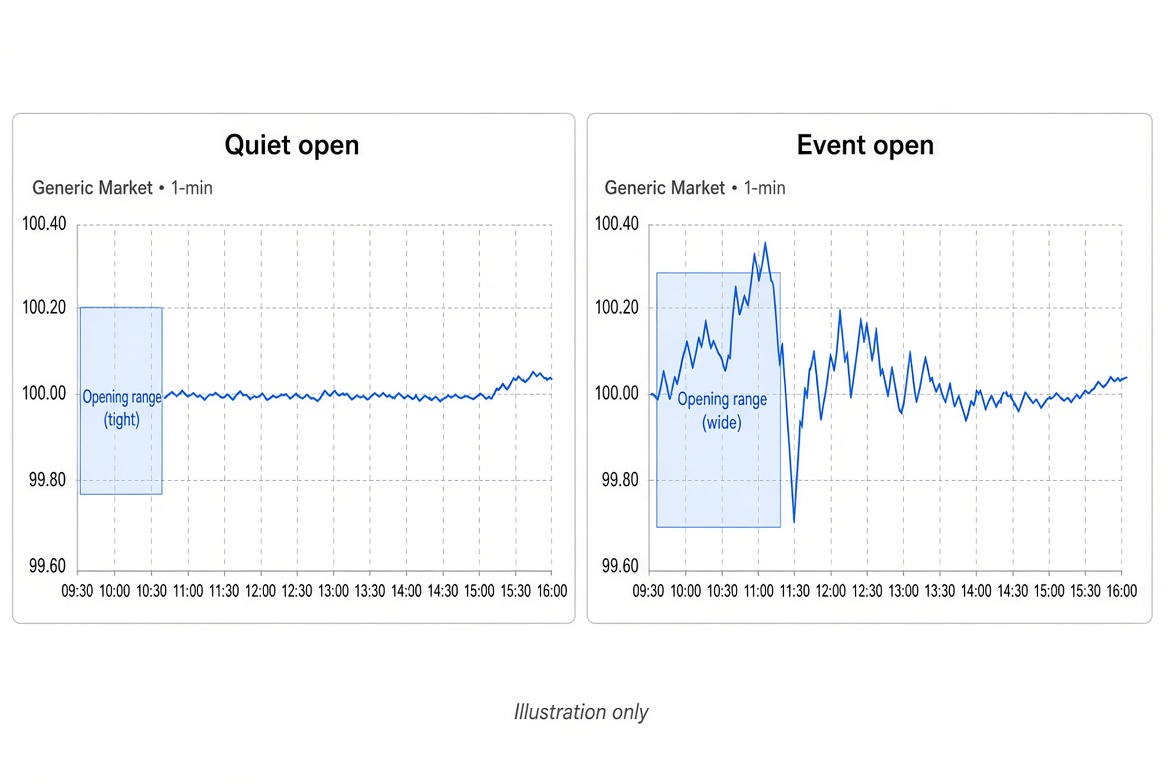
I like the open as a measurement. I do not like it as a hunting ground.
The first 15–30 minutes of a cash session (or the first burst after a futures rollover into the day session) is where overnight inventory meets people who slept on an opinion. Spreads are worse. Stops are closer. Everyone has a level from a tweet.
I wait.
What I use the opening range for
I box the high and low of that first window. That box is the day’s first agreed range.
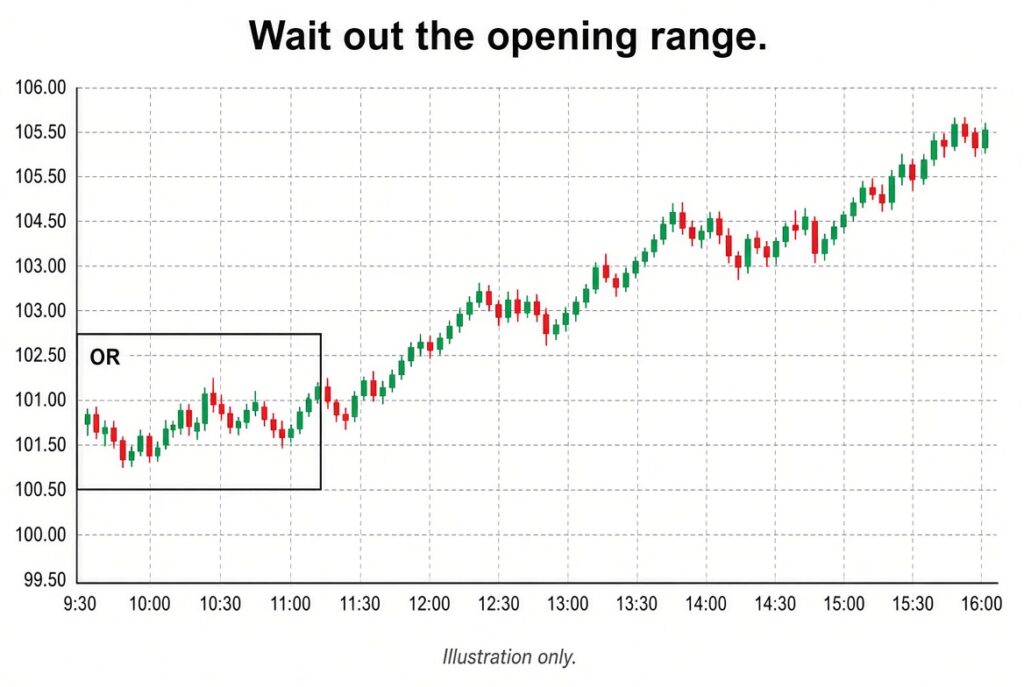
After it is printed I only care about two events:
– A hold inside: the day may be a range day. I do not force a breakout.
– A leave-and-stay-out: the box becomes a reference, like last week’s range on the [Sunday map](https://traderslook.com/).
I do not need a fancy opening-range breakout system. I need to stop treating minute one as a signal.
When I will trade the open
Rarely. Only if:
– It is explicitly a session strategy I am sampling with reduced size
– The event risk is already known and accepted
– The stop can sit beyond the box without breaking the risk cap
That is a different job than swing trading. If you are a swing trader pretending to be a scalper at 9:31 because you are awake, you have changed styles without changing the plan.
A practical default
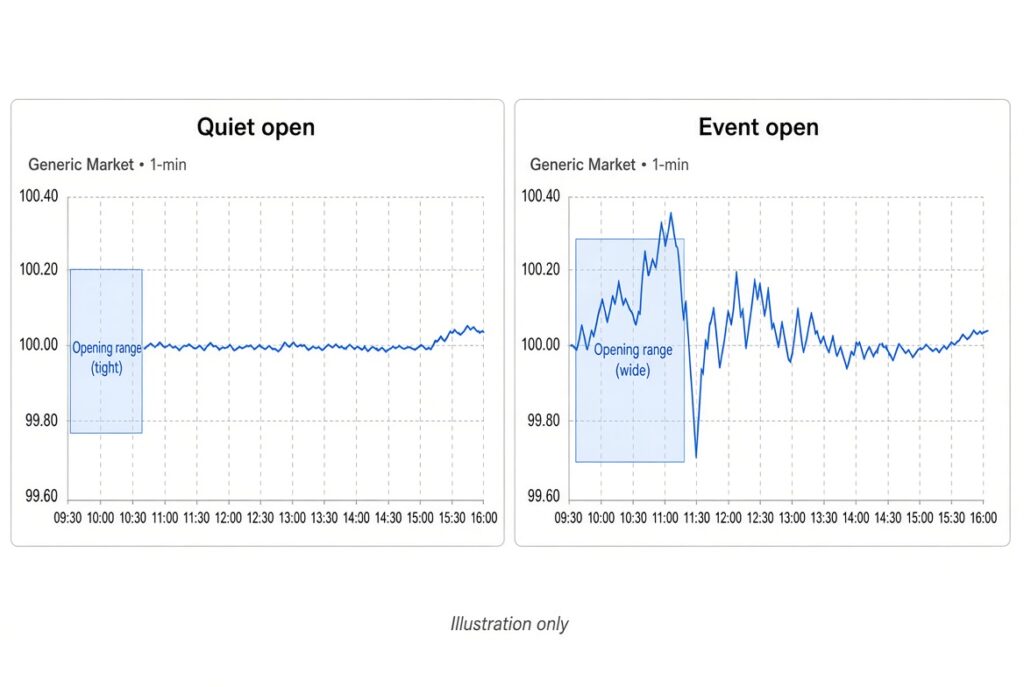
– Minutes 0–30: no new risk unless the plan says so in writing
– After 30: first look at whether the box still contains price
– If I already have a swing from yesterday: I do not add at the open just because the box looks exciting
Day traders can invert this note. The point is not that opens are evil. The point is that the open is a different market than the rest of the day, and mixing them without a rule is how FOMO gets a time stamp.
Write the wait into the checklist so you do not renegotiate it when the first candle is large.