An unused setup is not a missed fortune. It is inventory I refused to put on the book.
I pass on more ideas than I take. That ratio is the point of the pre-week map and the checklist. Below are three patterns I still skip even when the drawing looks clean.
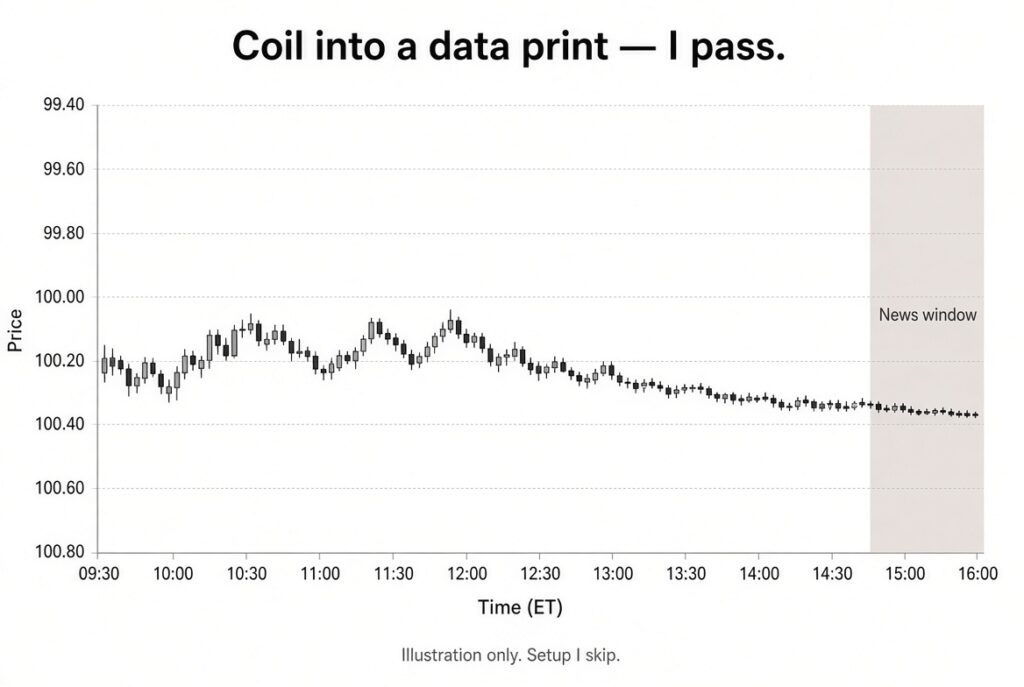
1. The coil that ends in a data print
A range shrinks for two or three days. Every YouTube thumbnail will call it a breakout. If that break sits inside a scheduled CPI, FOMC, or earnings window, I do not have a technical trade. I have a ticket to the print.
I will not guess the first minute after the number. I also will not leave a tight stop in the range and hope. Either the event is the trade — which I do not treat as my edge — or I wait for a close after the number and build from the new range.
This is the same stance as the news-event pieces on this site, written as a pass instead of a playbook.
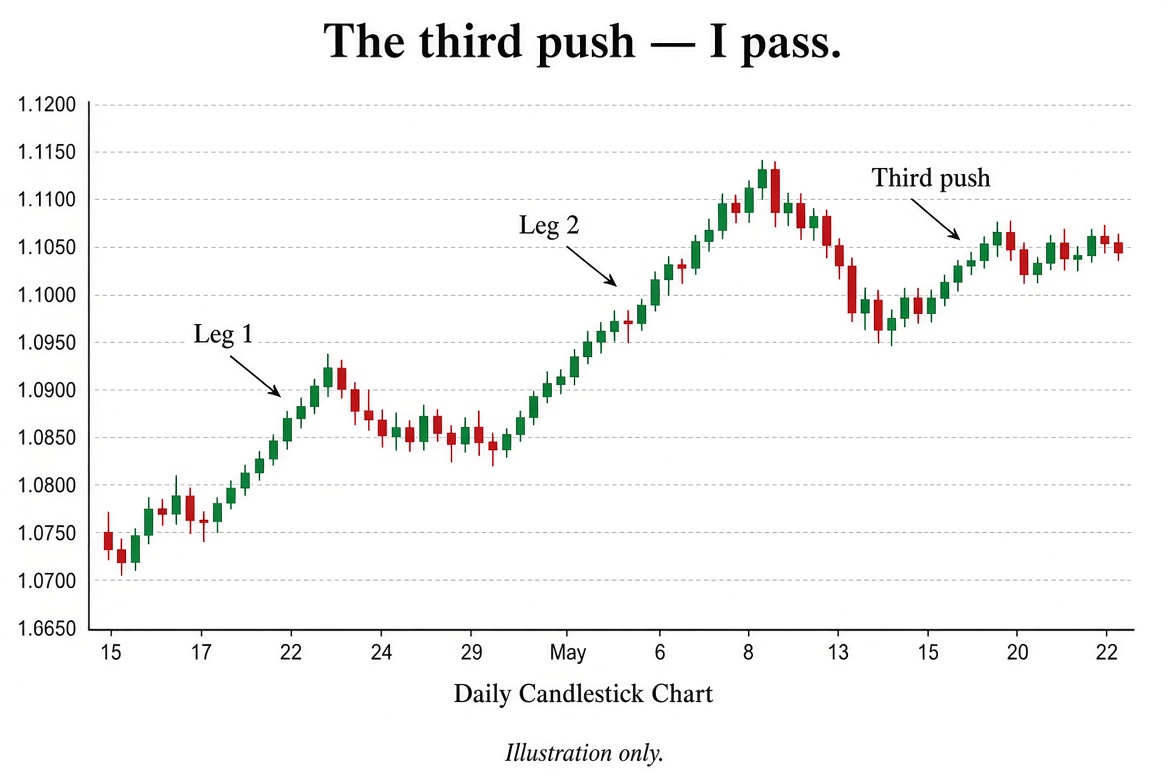
2. The third push
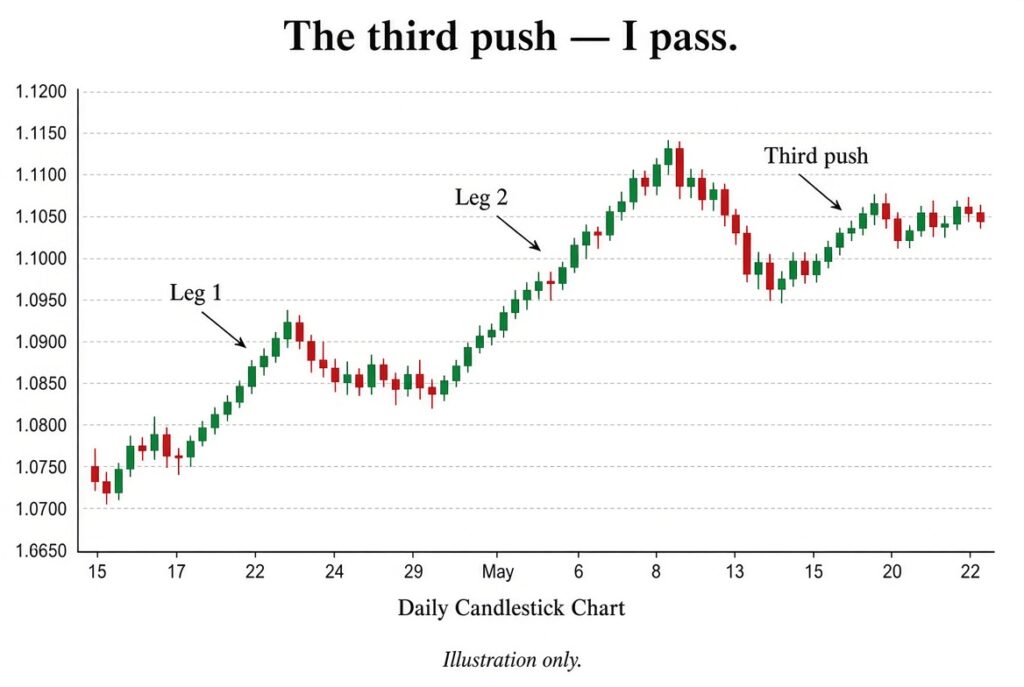
Two legs already paid. The chart now offers “one more” in the same direction, often with a smaller flag. Statistically that third push can work. For me it fails a different test: reward to risk is usually worse because the obvious stop is now far away and the remaining room into the next higher-timeframe level is small.
If I have to sell myself on the third push with a moving average, I already know I am late. I let it go and wait for a real change of character, not a continuation I will have to defend with hope.
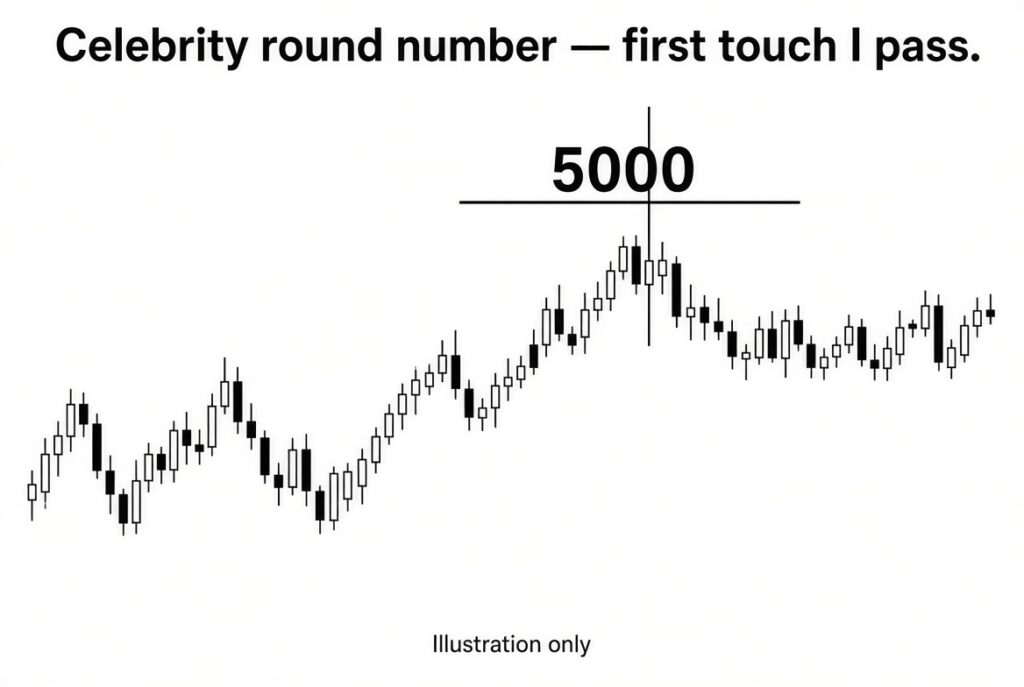
3. The famous round number with both sides hunting it
Think of a big figure on FX, a big handle on an index, a widely watched stock round number. Everyone sees it. The tape often spends a session spraying stops on both sides.
I can use that number as a reference on the weekly map. I do not use the first touch as an entry. First touch at a celebrity level is usually other people’s stops, not a finished auction. I want a close through, or a failed break that has already taken the obvious liquidity, before I care.
That is ordinary support and resistance with one extra filter: popularity is not confirmation.
How I record a pass
I still journal it.
“Passed: coil into Thursday data. Would have been a 5-minute breakout.”
That line does two jobs. It stops the “I missed it” loop, and it gives me a sample of skipped trades to review at month-end. If skipped trades would have been winners all month, I study whether my filter is too tight. If they would have been noise, the filter stays.
Passing is not fear. Fear is taking the trade so I do not have to sit with the feeling of being left out. That feeling is documented here: FOMO.